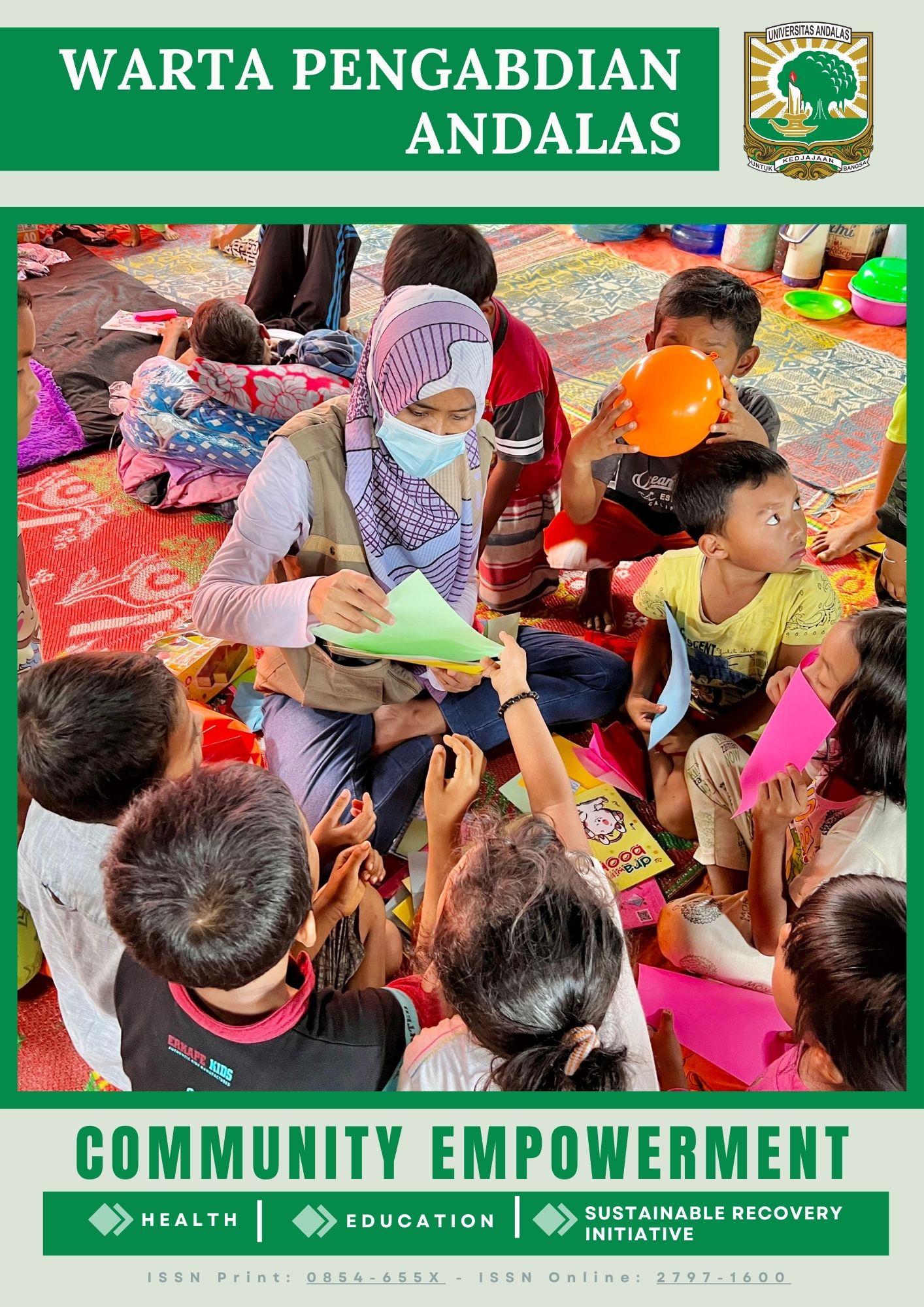
Translation Training to Enhance Arabic Language Proficiency for Al Mandily Islamic Boarding School Students
DOI:
https://doi.org/10.25077/jwa.32.3.323-334.2025Keywords:
Translation Training, Arabic Language Competence, Participation Action Research (PAR)Abstract
This community service project on Arabic translation training at Al-Mandiliy Islamic Boarding School, Panyabungan, Mandailing Natal, aimed to improve students’ proficiency in Arabic, with a focus on translation skills. Utilizing the Participatory Action Research (PAR) approach, the program actively involved students and teachers in identifying problems, planning solutions, implementing training, and conducting joint evaluations. The training consisted of several phases: problem identification, participatory planning, interactive implementation, reflection, joint evaluation, and sustainable follow-up. The results demonstrated significant improvement in students' understanding of Arabic-to-Indonesian translation techniques and strategies, particularly in conveying meaning within appropriate contextual frameworks. Despite these gains, challenges such as limited vocabulary, inadequate grammar mastery, over-reliance on literal translation, and difficulty in constructing well-formed Indonesian sentences were observed. Reflection and evaluation phases revealed substantial progress in the students' translation competence. Overall, the training not only enhanced the students' Arabic skills but also contributed to the broader improvement of educational quality at the boarding school. These outcomes are essential for strengthening students’ capacity to comprehend Islamic texts and prepare them for academic, religious, and social responsibilities.
Downloads
References
Akmaliyah, A., Gumilar, S., Pamungkas, M. I., Addriadi, I., Hapriyonita, S. E., Suherman, M., & Nuri, Z. (2023). Imitating Quranic sentences as a learning strategy for translating Arabic into Indonesian. Indonesian Journal of Applied Linguistics, 13(1). https://doi.org/10.17509/ijal.v13i1.58265
Al Kayed, M. M. (2023). The challenges facing translation students in translating sports idiomatic expressions from Arabic into English. International Journal of Arabic-English Studies. https://doi.org/10.33806/ijaes.v24i1.568
Al-Batineh, M., & Al Tenaijy, M. (2024). Adapting to technological change: An investigation of translator training and the translation market in the Arab world. Heliyon, 10(7), e28535. https://doi.org/10.1016/j.heliyon.2024.e28535
Al-Hassaani, A. M. A. (2024). Wh-Questions in Translation among Arab EFL learners: Challenges and solutions. Journal of Ecohumanism, 3(8). https://doi.org/10.62754/joe.v3i8.5548
Ansori, M., Afandi, R., & Syafitri, R. (2021). Pendekatan-pendekatan dalam University-Community Engagement.
Cheikh, M., & Rabab’ah, G. (2025). From the American Sitcom ‘Seinfeld’ to modern standard Arabic: Implicature translation by Arabic EFL students. Ampersand, 14, 100213. https://doi.org/10.1016/j.amper.2024.100213
Hakimi, F. T. A. (2022). Dinamika pondok pesantren di Kabupaten Padang Lawas: Kajian historis-sosiologis.
Hmaidan, M. A. A. (2024). Difficulties and proposed solutions in translating cultural-bound expressions from English into Arabic. Journal of Ecohumanism, 3(7), 523–532. https://doi.org/10.62754/joe.v3i7.4220
Lazuardi, A. M., & Syaheed, S. M. (2024). Enhancing Arabic language proficiency through interactive learning programs. Lahjatuna: Jurnal Pendidikan Bahasa Arab, 4(2), 89–102. https://doi.org/10.38073/lahjatuna.v4i2.2584
Maghfurin, A., Husna, Moh. A., Cholid, N., Mazlan, N. A., & Jumiati. (2023). Enhancing Arabic speaking skills in traditional pesantren. Alsinatuna, 9(1), 16–28. https://doi.org/10.28918/alsinatuna.v9i1.1957
Mahbubah, L., Biahmada, A. M. M., & Mauludiyah, L. (2020). Learning Arabic translation at Islamic Boarding School in Madura. Izdihar : Journal of Arabic Language Teaching, Linguistics, and Literature, 2(3), 231–242. https://doi.org/10.22219/jiz.v2i3.10578
Makarova, V. V. (2024). The process of forming the linguistic and cultural competence of the translator. Педагогика и Просвещение, 4, 144–158. https://doi.org/10.7256/2454-0676.2024.4.71476
Mohideen, H. (2025). The impact of Arabic-translated books on Arabic language learning in Sri Lanka. Jurnal Bahasa Arab, 1(2), 52–61. https://doi.org/10.69988/jba.v1i2.20
Myagmarsuren, T., & Uugantsetseg, N. (2023). Translation competence and its development and classification. Translation Studies, 11(1), 27–35. https://doi.org/10.22353/TS20230103
Rahman, F. (2017). Problematika Penerjemahan Bahasa Arab Ke Dalam Bahasa Indonesia Bagi Siswa Kelas V Di Madrasah Ibtidaiyah Darut Taqwa Sengonagung Purwosari Pasuruan. Studi Arab, 8(1), 57–74. https://doi.org/10.35891/sa.v8i1.1756
Rubtsova, A. V., Odinokaya, M., Barinova, D., & Almazova, N. I. (2022). Formation of Translation competence in the process of Engineering Education. In D. Bylieva & A. Nordmann (Eds.), Technology, Innovation and Creativity in Digital Society (Vol. 345, pp. 892–907). Springer International Publishing. https://doi.org/10.1007/978-3-030-89708-6_72
Shahata, L. H. A. (2020). Sentence translation challenges among Arabic-speaking EFL students. Open Journal of Modern Linguistics, 10(04), 321–339. https://doi.org/10.4236/ojml.2020.104019
Susilo, A., & Wulansari, R. (2020). Sejarah pesantren sebagai lembaga pendidikan Islam di Indonesia. Tamaddun: Jurnal Kebudayaan Dan Sastra Islam, 20(2), 83–96.
Yao, C. (2024). The components and development of translation competence of translator in the information age. Lecture Notes on Language and Literature, 7(7). https://doi.org/10.23977/langl.2024.070716
Downloads
Published
How to Cite
Issue
Section
License
Copyright (c) 2025 Rani Ismil Hakim, Isra Hayati Darman, Hanifah Oktarina

This work is licensed under a Creative Commons Attribution-NonCommercial-ShareAlike 4.0 International License.















 Address
 Contact Info